

UC Merced doctoral candidate Adekunle “Kunle” Adewole has been selected as a 2026 Lindau Nobel Laureate Meetings Fellow.
Adewole was also chosen as one of 18 participants in the Baden-Württemberg International Post Meeting Programme for Young Scientists.
“I keenly...
Chemical Sciences

Students at UC Merced and those who might someday become Bobcats are the focus of FARMERS, Professor Rudy M. Ortiz’s training program funded again for $1 million by the U.S. Department of...
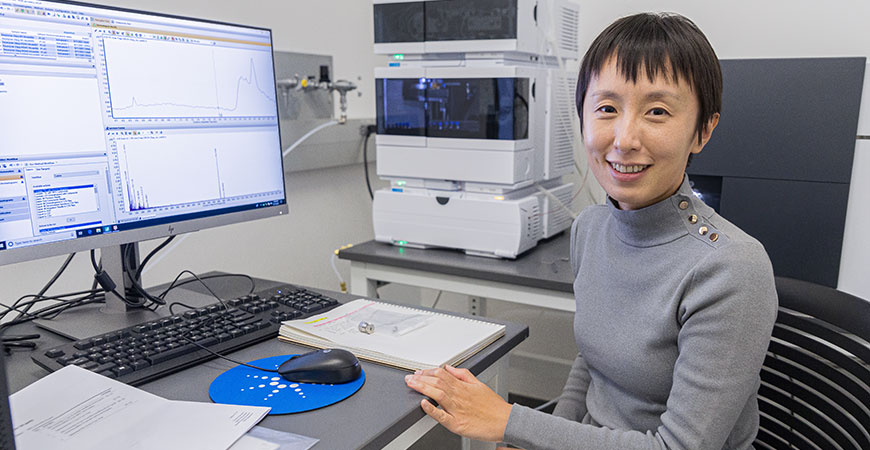
Lots of people look at clouds and think about flying, floating or the shapes they see. When atmospheric chemistry Professor Xuan Zhang looks at clouds, she thinks about tiny particles in the air....
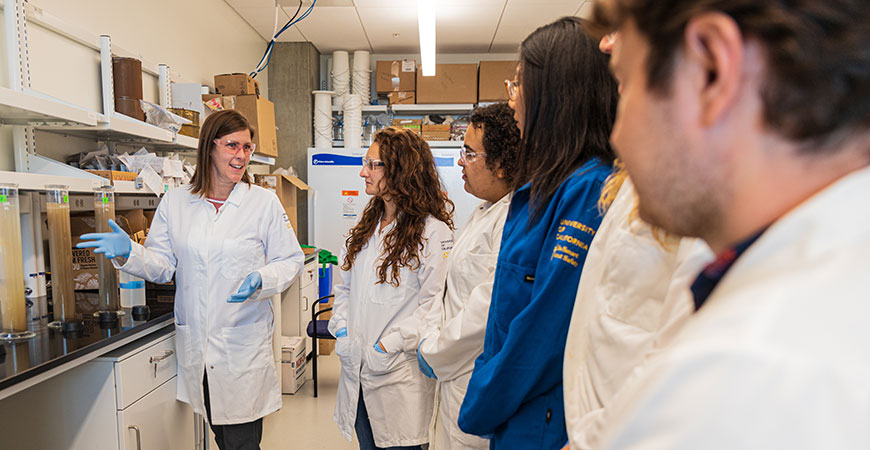
Human waste isn’t a topic most people want to talk about.
But environmental systems Professor Rebecca Ryals embraces the subject, especially when it comes to mitigating climate change,...
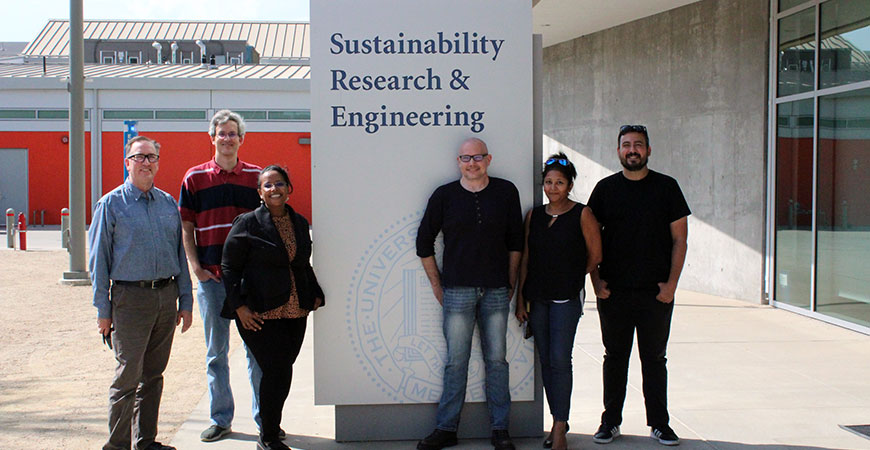
Graduate students and a convergence of physics, engineering and environmental science could result in not only the next generation of solutions to pressing environmental challenges, but a new group...
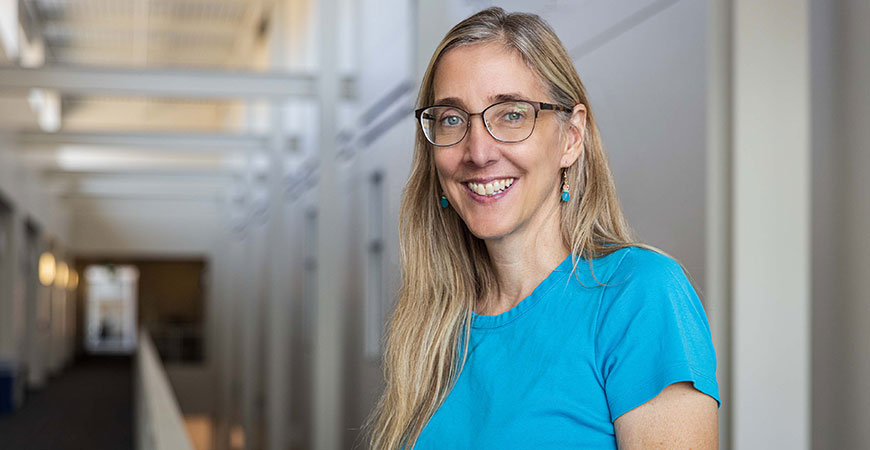
An HIV-inhibiting silk film designed to advance prevention and help end the AIDS epidemic in countries in Africa, developed by UC Merced Professor Patti LiWang, has met recent success at the...
Daily cycles in virtually every aspect of our physiology are driven by biological clocks (also called circadian clocks) in our cells. The cyclical interactions of clock proteins keep the biological...
Cartilaginous fishes such as sharks and skates have a sixth sense, but it’s not ESP — it’s electrosense. Such fishes use hundreds or thousands of specialized organs to sense prey...
Like many people this summer, Professor Shahar Sukenik has dehydration on his mind.
But it’s not the soaring outside temperatures prompting this focus. Dehydration has been a theme of his...

The over the counter, “safe,” organic-compliant insecticides people purchase at home-improvement stores could be causing a problem that goes far beyond the vegetable garden or farm field...
Pages


