


When farmworkers decide conditions are so harsh they have to leave the fields, the story doesn’t end there — it moves to another corner of the labor market.
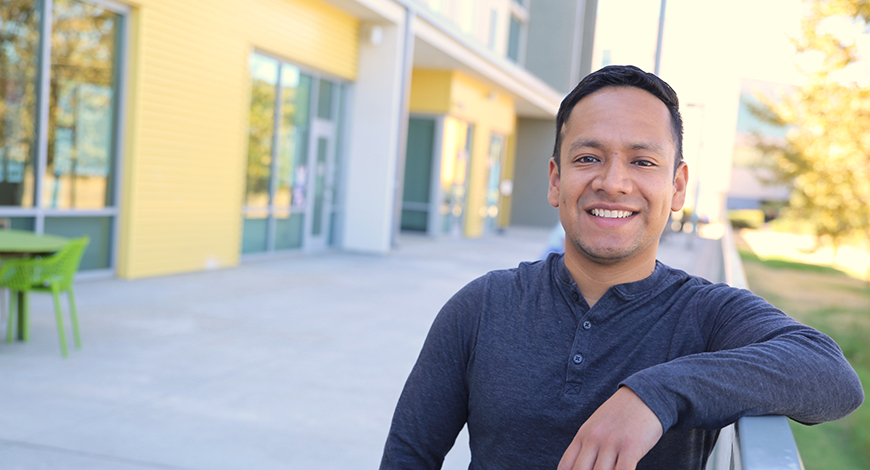
UC Merced Sociology Ph.D. candidate Andrés Arias captures that in his article, “’It is worse in the fields:’ how racial capitalism disciplines Latino day laborers in California’s Central Valley,” published in Social Problems. He draws on interviews with workers who left agricultural jobs only to experience new forms of exploitation as day laborers.
“I do research with some of the most vulnerable communities in the Central Valley,” Arias said. “I study the way workers experience non-compliant work and what they do when they experience this — whether they report it or not, how they make decisions around that.”
His research, under the guidance of professors Edward Flores and Meredith Van Natta, followed immigrant and Latino day laborers in the Central Valley and found they often endure wage theft, unsafe conditions and other workplace violations.
He argues that workers’ responses to exploitation are shaped not only by legal status or fear of retaliation, but by paternalistic relations with employers, a shared cultural background and racial capitalism — a system of dividing and exploiting people by race.
“The agriculture system was so bad to them that they had to leave the industry,” Arias said. “They often compared their working conditions within the day labor industry to how they were experiencing things in the fields … ‘It’s better here. If not here, then it’s going to be worse over there.’”
That recurring sentiment inspired the article’s title.
Arias’ personal experience helped shape his interest in the topic and motivated him to study this population.
His family immigrated from Uruapan, Michoacán, Mexico, to the U.S. when he was 7. Since settling in San Jose more than two decades ago, his parents have worked low-wage jobs.
“I also put myself through undergrad through low-wage work,” said Arias, who became a U.S. citizen in 2022. “I’ve always been interested in the way that labor shapes people’s lives.”
“I took a class in sociology as an undergrad. I came across this article on informal workers, and I remember seeing my life in that research article,” he said. “I remember thinking to myself, ‘Wow, you can study the experiences of undocumented migrants.’”
For Arias, placing those stories in a top sociology journal is both a scholarly milestone and a way to make sure Central Valley workers are no longer invisible in national debates. He is working with UC Merced’s Community Labor Center to help inform policy and community advocacy that push for stronger enforcement of labor laws and safer conditions for immigrant workers.
“I do hope that people take action in ameliorating the working conditions in industrial agriculture or informal work here,” he said.
In addition to his solo research publication, Arias also received an Honorable Mention Award at the American Sociological Association meetings in New York City last month.
“It's motivating to see that my work can be meaningful within the field of sociology,” he said. “It’s inspired me to keep writing. This summer, I completed two chapters of my dissertation.”
Brenda Ortiz

Senior Public Information Representative
Office: (209) 228-4203
Mobile: (209) 628-8263


