


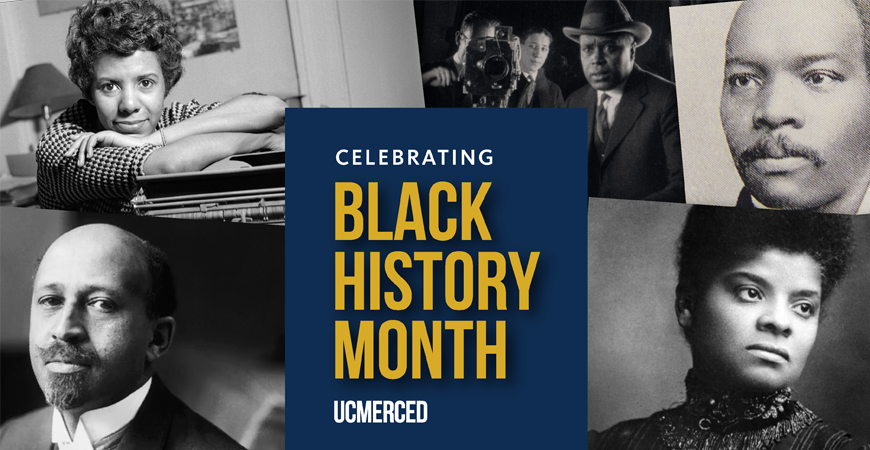
Black History Month often honors familiar names, leaders whose courage and determination changed the course of a nation. But many others have made groundbreaking contributions that exposed injustice, advanced civil rights, reshaped American culture and revolutionized technology. Their achievements and efforts were met with threats, ignorance and suppression. Some had soaring potential cut short by mortal illness.
We asked members of UC Merced’s academic community to reflect on Black historical figures who made powerful contributions to their fields and to society. We believe shining a light on their lives and legacies can more strongly connect them to the work of students, researchers and creators at UC Merced and beyond.
W.E.B. Du Bois
Du Bois (1868–1963) was a sociologist, epidemiologist and co-founder of the NAACP. He authored seminal works that influenced the development of disciplines in the social and health sciences, such as “The Souls of Black Folk," which introduced the idea of "double consciousness." His use of census information, door-to-door interviews and data graphics helped establish American sociology as an evidence-based science.
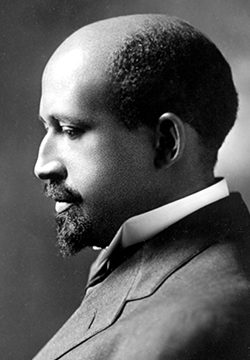 Postdoctoral Fellow and medical sociologist Leia Belt on Du Bois: At a time when racist pseudoscience and white supremacy dominated academic discourse, Du Bois insisted on combining statistical analysis with qualitative data collection to document the lived realities of Black Americans and demonstrate that structural forces — not biological differences — produced racial inequality.
Through his academic work, Du Bois and his research team at Atlanta University helped establish one of the first schools of scientific sociology in the United States and pioneered innovative approaches to data visualization globally
Beyond academia, Du Bois was a father, spouse, public intellectual, activist and artist. In addition to co-founding the NAACP, he served as editor of The Crisis, using writing as a tool for education and mobilization. He also used art to share his social and political critiques and liberatory hopes, penning novels such as “The Quest of the Silver Fleece,” as well as essays, poetry and the historical pageant-play “The Star of Ethiopia.”
Lorraine Hansberry
A playwright and civil rights activist, Hansberry (1930–1965) was the first Black woman to have a play produced on Broadway with "A Raisin in the Sun." The play earned her the New York Drama Critics' Circle Award at age 29. An accomplished journalist, she wrote about racial and social justice. Her life was cut short by cancer at 34.
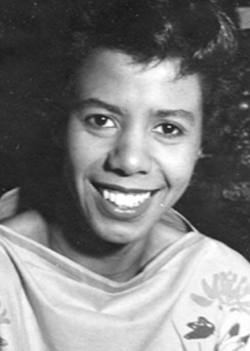 Critical race & ethnic studies and history Professor Nicosia Shakes on Hansberry: When “A Raisin in the Sun” premiered on Broadway in 1959, Hansberry received international attention. Inspired by her family’s experience with housing segregation in Chicago, “A Raisin in the Sun” was nominated for several Tony awards. She earned the New York Drama Critics' Circle Award for Best American Play. “Raisin in the Sun” has become one of the most staged American plays globally, with several film adaptations.
Hansberry wrote other plays, including “The Sign in Sidney Brustein’s Window,” which premiered on Broadway in 1964, and “Les Blancs.”
As a journalist, she was a prolific writer who authored articles about race and gender. She was committed to global anticolonial struggles as well as the U.S. struggle for civil rights, working alongside other famous activist artists such as James Baldwin, Harry Belafonte and Lena Horne. She lived to see the passage of the 1964 Civil Rights Act but passed away a year later.
Hansberry left behind many unfinished writings, including an autobiography, “To Be Young, Gifted and Black,” published in 1969.
Despite her short life, Lorraine Hansberry’s name remains etched in U.S. history for her contributions to theater and her commitment to racial justice.
Oscar Micheaux
A pioneering filmmaker, Micheaux (1884–1951) produced the first known Black-directed feature, "The Homesteader," in 1919. He directed more than 40 "race films" that countered Hollywood stereotypes. "Within Our Gates," in 1920, was a searing, direct response to D.W. Griffith's "Birth of a Nation." Micheaux faced heavy censorship, segregationist theater laws and resistance from white society.
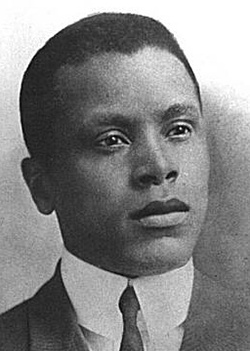 Media and performance studies Professor Yehuda Sharim on Micheaux: Oscar Micheaux was not simply a filmmaker; he personified the start of a revolution in cinema and far beyond. In addition to his incredible legacy of 44 films and seven novels, Micheaux reminds us that cinema and creativity belong to all — ALL — of us. All of us who believe in equality. All of us who fight against the odds. All of us who fight to create a space for discipline and fire to teach ourselves to achieve new, often unprecedented levels of excellence.
All of us — from Haile Gerima, Bad Bunny, June Jordan and Charles Burnett to Ruben Sanchez, Cherien Dabis, Mohammed Bakri and Ava Duvernay — who insist our communities should be represented with care and profound artistry. And all — ALL — of us who are forced into cells, imaginary and real, but then demand liberation and dignity with unimagined determination.
Ida B. Wells
A pioneering investigative journalist and civil rights activist, Wells (1862–1931) led an anti-lynching crusade and debunked narratives used to justify racial violence. Born into slavery, Wells co-founded the NAACP and championed women's suffrage. Throughout her career, she faced systemic racism and exclusion.
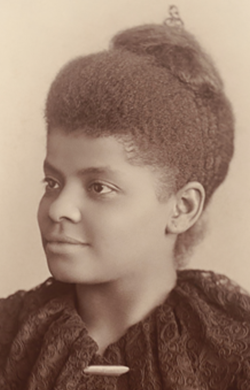 African history Professor Maria Martin on Wells: She was a courageous, intellectual and enterprising woman who fought against extrajudicial killings (lynchings) of Black people. Wells was born in Mississippi and later domiciled in Memphis, where she became a committed schoolteacher. When she wrote an editorial for The Evening Star newspaper that protested the conditions of Black schools, she lost her teaching position.
Afterward, Wells became a prolific and devoted journalist who co-owned and wrote for the Free Speech and Headlight newspaper in Memphis. She was known as Princess of the Press. Her activism grew exponentially after she gave a speech, “Lynch Law and All Its Phases,” in 1893. The speech chronicled the brutal lynching of three Black entrepreneurs who opened a grocery store that competed with a nearby white-owned grocery store. The Black men were friends of Wells.
She was moved by righteous indignation to speak out about the heinous murders of Black people by lynching in the South. In Free Speech, Wells wrote about the lynching of her friends. As a result, her office was stormed and destroyed. She was out of town, but a threat was made against her life and she was warned not to return. Nonetheless, Wells continued to speak about and report on the horrid details of Southern lynchings.
Ida B. Wells was a beacon of truth and accountability for the democratic notion of liberty that so many cite as foundationally American.*
* Shirley Wilson Logan, “With Pen and Voice” (Carbondale and Edwardsville: Southern Illinois University Press, 1995), pages 75-79.
Granville Woods
Woods (1856–1910), a prolific inventor, obtained 45 patents and revolutionized railroad and electrical technology. Often referred to as “Black Edison,” his innovations included a telegraph that allowed communication between moving trains. As a boy, he was transfixed by locomotives chugging across the prairie. By age 10, he was working in a railroad shop. Woods faced racism, patent disputes and financial struggles. He died at 53 of complications from smallpox.
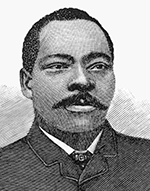 Professor Sarah Kurtz, Electrical Engineering program chair, on Woods: He is sometimes credited with inventing the roller coaster, though his contribution was how to bring electrical power to the roller coaster cars in a way that was safe to people who might be near the tracks. Woods also invented a “telegraphy” that enabled a telephone and telegraph connection on the same wire, as well as a safety dimmer that was used to dim lights in theaters safely and that reduced electricity use by 40 percent.
How many of us could name the inventor of the many devices that run our world? Granville Woods is an example of an inventor we may not know by name, but who contributed more than 50 inventions.
 Public Information Officer

