



em·pa·thy (noun): the ability to recognize, understand and share the thoughts, emotions and perspectives of another person.
It is a means of connection, a path to understanding. Can you see where I’m coming from? Walk a mile in my shoes.
Empathy is the keyword for the 2026 Todo Cambia Human Rights Film Festival, scheduled for March 2-6. Through moving pictures, multimedia creations and the words of UC Merced academics and special guests, the festival, as its flyer states, will remind us “that seeing one another can transform the world within and around us.”
“In a world where media and cinema are dominated by crisis, we can easily lose sight of one another, of our shared humanity, of art and culture, of our potentialities and vulnerabilities,” said festival organizer and filmmaker Yehuda Sharim, a UC Merced professor of media and performance studies. “Todo Cambia invites us to look into that mirror of self, our personal and collective crossroads, where cinema and art offer an antidote that invites us to reflect, heal and act.”
Here is Todo Cambia’s full schedule; attendees are encouraged to register in advance. There is no cost to attend.
The festival’s first two days include three Merced premieres:
Monday, March 2
Filmmaker and UC Merced global arts studies lecturer Shammi Samano will present her short film, “Doorways,” which portrays the Pakistani immigrant experience in Lisbon, Portugal. In addition, artist and UC Merced graduate student Mariam Ohan will present a multimedia work that documents challenges faced by Assyrian women who migrated to Turlock.
Tuesday, March 3
Writer and activist George Lipsitz, a UC Santa Barbara sociology professor emeritus, will discuss issues raised in his upcoming book “Ethnic Studies at the Crossroads” with UC Merced critical race and ethnic studies professors Nicosia Shakes and Christina Baker.
Wednesday, March 4
Two films will be screened. With footage filmed by incarcerated men, “The Alabama Solution” documents evidence of violence, corruption and humanitarian crises in Alabama’s prison system. “All That’s Left of You” tells the story of a young woman who returns to the Middle East after her father’s death and faces grief, identity issues and cross-cultural family ties.
Thursday, March 5
Two films by Hungarian director Béla Tarr, “Werckmeister Harmonies” and “The Turin Horse,” will be shown. Tarr, who died in January at age 90, had a signature style that included black-and-white cinematography, dark themes and exceptionally long, choreographed single shots.
Friday, March 6
The day will revolve around the experiences of Black people in Latin cultures. The first presentation, scheduled for 1:30 p.m. in Classroom and Office Building 2, Room 290, will demonstrate a publicly searchable online database called TrayectoriasAfro.org. Users can learn about the lives, movements and relationships of African-descended people, both enslaved and free, in what historians call New Spain — a colony that encompassed today’s Mexico, Central America and the southwest United States. New Spain existed for 300 years, from the 16th to the 19th centuries.
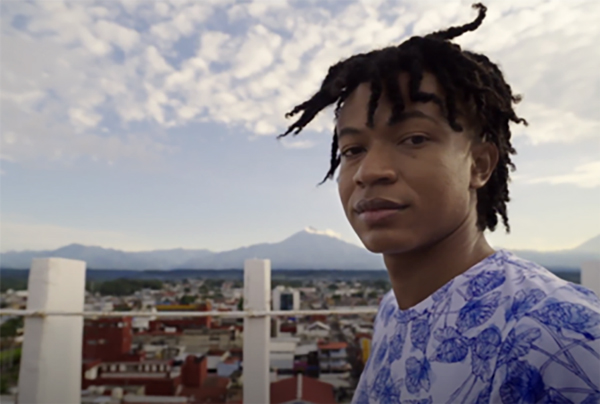
The conversation about African and Black populations in Latin America will continue at 6 p.m. at The Mainzer, 655 W. Main St., Merced. A short documentary, “Coronas Negras,” will be shown. Directed by André Lô Sánchez, it explores the lives of four people from Senegalese families in Mexico. Their “Black Crown” hairstyles affect their experiences in Mexican society. After the screening, Sánchez and Diana Pinacho-Lopez, a filmmaker and activist, will converse with attendees.
Hosts and speakers for the all-day event will be UC Merced Latin American history Professor Sabrina Smith, UC Irvine history Professor Alex Borucki, UC Riverside ,anthropology Professor Anthony Jerry and UC Santa Barbara art history Professor Brisa Smith Flores. Register to attend the March 6 events.
Co-sponsors of Todo Cambia include UC Merced’s School of Social Sciences, Humanities and Arts, the UC Multicampus Research Programs and Initiatives project “Routes of Enslavement in the Americas,” and Alianza MX, which attracts talent and funding for research teams from the UC and Mexico across disciplines ranging from STEM to the arts.
 Public Information Officer

