


Key Points
-
UC Merced is one of the first 14 institutions nationwide to earn the new Carnegie Elective Classification for Sustainability, recognizing its comprehensive commitment to sustainability and climate action.
-
The university is the only four-year California institution and the only UC campus to receive the classification, adding a fourth Carnegie recognition to its distinctions for research, student opportunity and community engagement.
-
Sustainability is embedded across UC Merced’s campus, from 100% LEED-certified public-facing buildings and renewable energy efforts to student learning, research, conservation and programs that help local residents reduce energy use and costs.
UC Merced has earned the Carnegie Elective Classification for Sustainability, becoming one of the first 14 institutions to receive the new distinction.
The classification recognizes institutions that demonstrate how sustainability is integrated across areas that include curriculum, research, operations, career preparation and community engagement. UC Merced participated in the 2025 pilot program that brought together diverse higher education institutions to test and help shape the classification framework, application process and review criteria. It's the fourth recognition UC Merced has received from the Carnegie Foundation, which also has named the university an R1 institution, ranking it among the nation's top research universities, as well as a leader in community engagement and as an "Opportunity College" for its student success.
"UC Merced has distinguished itself as a leader in sustainability, from our groundbreaking research and innovative building practices to the culture of stewardship that defines our campus," Chancellor Juan Sánchez Muñoz said. "Sustainable practices are integral to the university's exceptional culture of success and our dedication to creating a better future, and it is an honor to see this longstanding commitment recognized by the Carnegie Foundation."
As a pilot institution, UC Merced completed a collaborative and rigorous self-study and provided feedback on the Carnegie framework, prompts, evidence requirements and review process. It is the only four-year California university and the only University of California campus to earn the classification.
The Carnegie recognition is the latest for the university that is continually ranked as among the nation's leaders in sustainability. What does that mean, and why is it so important?
"It's more than just making a resource last," said Sawani Goonatilleke Nallani, assistant director of sustainability at UC Merced. "It's looking at the economic, environmental and social aspects of climate change and what it's doing to our present and future."
Nallani and Sustainability Director Daryl Pierson are leading new efforts to increase awareness of what UC Merced is already doing and to do even more to protect the planet's precious resources.
"We are trying to create a well-thought-out strategy to advance sustainability, climate and resilience work," Pierson said. "And we include all of our stakeholders - academics, research, students and the community."
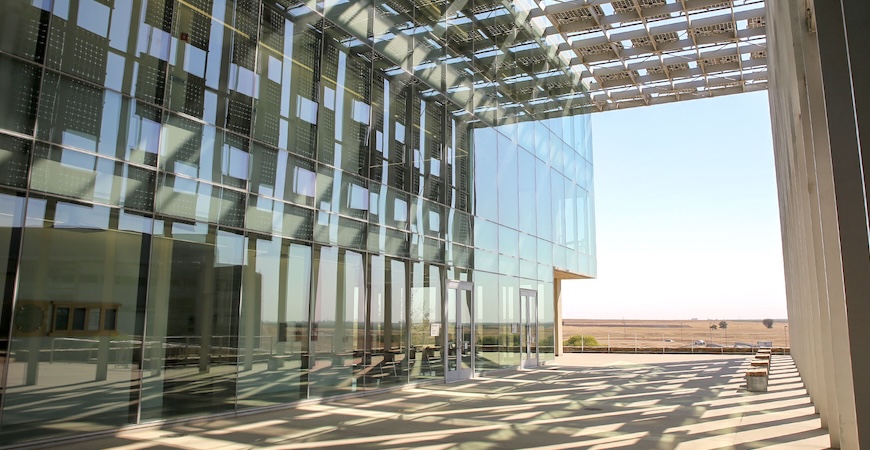
UC Merced is the only university in the United States with 100% of its permanent public-facing buildings certified under the U.S. Green Building Council's Leadership in Energy and Environmental Design (LEED) program.
"UC Merced has always emphasized research, sustainability and inclusive excellence in a highly diverse, student-centered environment," said Daniel T. Okoli, vice chancellor and chief operating officer. "This recognition is a wonderful acknowledgment of this vitally important work."
Sustainability requires collaboration across departments and work in a variety of areas, Nallani said.
"We are looking at the economic, environmental and social aspects of climate change and what it's doing to our present and future," she said. "For example, in the long term, companies save much more money by putting solar panels on and using wind power."
"Faculty members of the university are supportive of the efforts on sustainability on campus, led by Director Pierson, as indicative of their collaboration on this project to earn the Carnegie Elective Classification for Sustainability," said life and environmental sciences Professor Adeyemi Adebiyi. "There are also other areas and projects that faculty members continue to collaborate with the sustainability department, as we recognize its significance for our campus."
Another example of how the Office of Sustainability is looking to cut costs as well as protect scarce resources was evident at this year's commencement ceremony on campus. Gone were the coolers full of plastic bottles of water, replaced by large tanks and compostable cups.
The water monster, as Pierson called it, served up ice-cold, filtered water to attendees while reducing reliance on single-use plastic.
"We estimate there were 3,500 water bottles that we would typically use that we didn't," he said.
The water monster can be requested through the university's Living Lab, which uses the campus as an educational environment to learn. Students, staff and faculty are invited to propose projects that will improve the sustainability practices of the campus community.
Other efforts are focused on the community around the campus. The university partnered with the Rising Sun Center for Opportunity to train student teams to conduct energy audits of local homes, providing residents with resources and insight on how they might save on electricity and other costs.
"We worked with kids, not just training them to go into homes and monitor things like water flow but on building resumes and professional development," said Carlos Ortiz, an undergraduate student from the Bay Area who worked on the program.
The participating students got as much out of it as the community members they helped.
"I enjoyed it a lot; I liked seeing how you could make small changes that have a big impact," said Noemy Alvarado, a fourth-year environmental engineering major from Madera. "And it was nice seeing people happy."
Reuse is another major part of the campus' sustainability work. A project the office is working on gives students who are moving out the dorms an opportunity to donate, instead of discard, items they aren't using anymore. Pierson said the next step is a swap and shop store, where incoming Bobcats can pick up the appliances, clothes and textbooks left behind by their predecessors.
The Carnegie Elective Classification for Sustainability recognizes these efforts, which demonstrate a commitment to sustainability and climate action that is integral to the university's academic and public service mission.
Participating institutions are thoroughly reviewed in a variety of areas, including Institutional leadership, sustainability goals and governance. Reviewers consider academic curriculum and sustainability education, campus energy use and renewable energy, water conversation, green buildings and workforce development, as well as community partnerships and regional impacts.
"The group of inaugural institutions help bring this new classification to life," said Timothy F.C. Knowles, president of the Carnegie Foundation for the Advancement of Teaching. "We're proud to recognize their leadership and the many ways they are advancing sustainability across their campuses and communities."
The other 13 pilot institutions receiving the classification are: Bennett College, Carleton College, Clarkson University, George Mason University, Mt. San Antonio College, Pima Community College, Tohono O'odham Community College, Universidad del Sagrado Corazón, University of Arizona, University of Idaho, University of Nebraska-Lincoln, University of Nevada Las Vegas and University of Wisconsin-Eau Claire. These institutions will be part of the inaugural cohort of classified institutions, which will be announced June 2027 alongside institutions participating in the first full classification cycle. Institutions that receive the Carnegie Elective Classification for Sustainability will retain it for six years, through 2033.
Applications for the current classification cycle are underway, with a deadline of Dec. 18, 2026.
 Public Information Officer

