


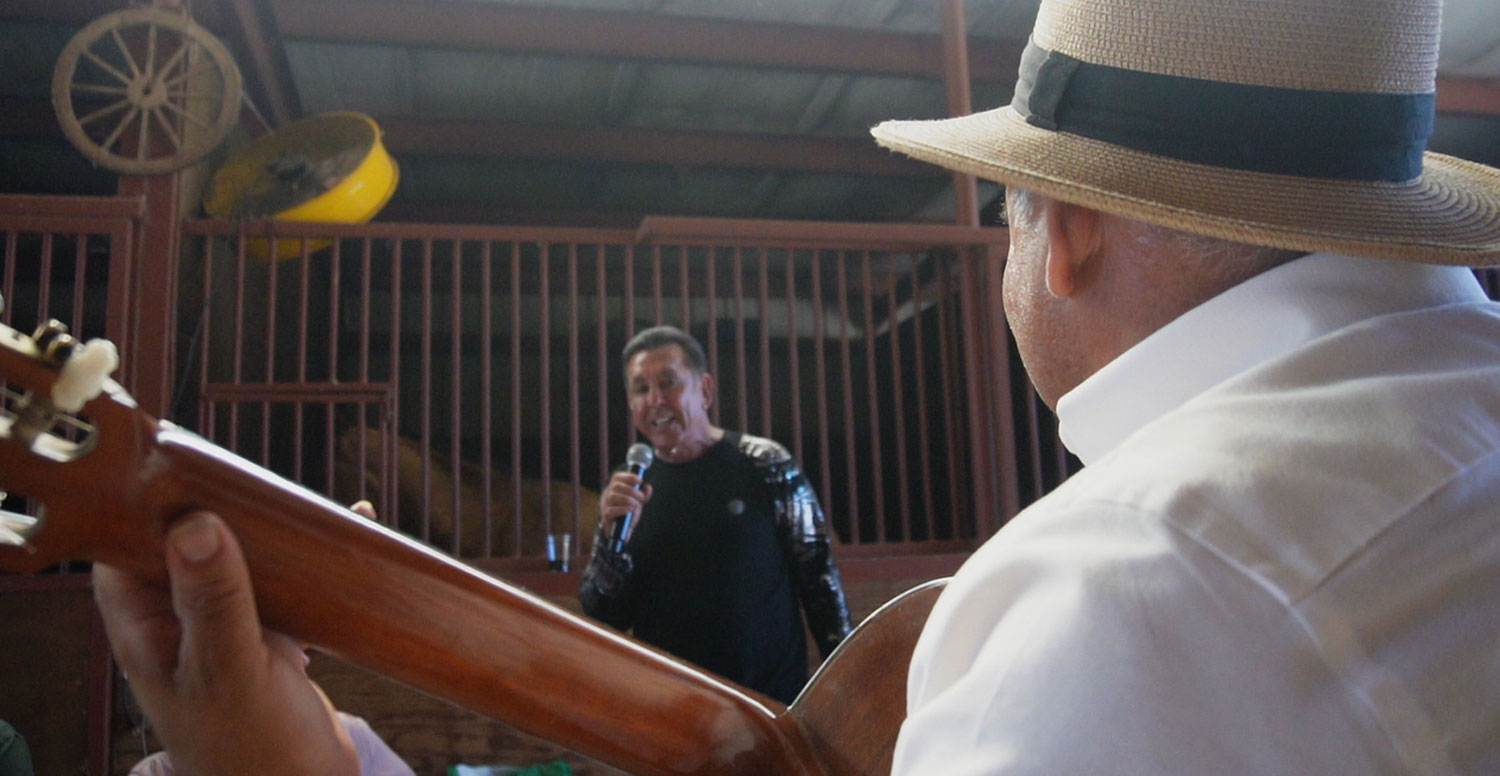
On a spring day in Merced’s Applegate Park, the man sat in front of a camera, spinning memories. He described decades of Latin music and dance pulsing in the city, moments drawn from eight decades of life and stories told by aunts and uncles.
His two interviewers took notes and checked the microphone’s levels. All good.
Then came a sound that smothered his voice — the blast of a horn and clatter of rolling steel as a train passed, only two blocks away. They waited. When it was quiet again, the man, David Soria, smiled.
His family lived near the tracks for generations, he told them. “When I hear the train,” he said, “I feel the spirit of my grandfather.”
Patricia Vergara and a student assistant were recording Soria as part of the UC Merced professor’s project to build an oral history of music in Merced County. But her subject’s words hit home. Vergara realized her project should capture more than music. She saw the power of sounds that trigger memories, sounds that evoke times and places long gone.
Her project would be more than a musical score. It would be a soundscape.
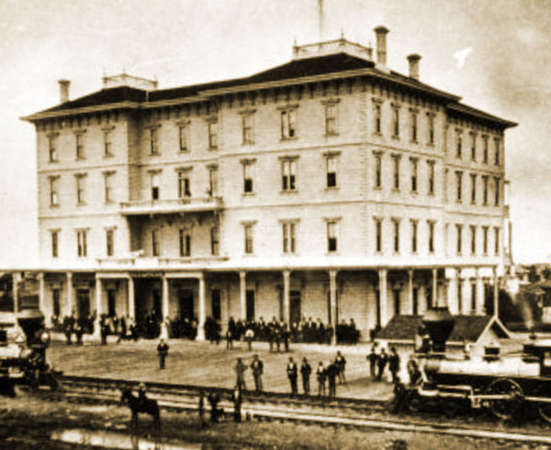
On Thursday, May 14, the product of four years of research and more than 60 interviews will debut at the Merced County Courthouse Museum. “Soundscapes of Merced” weaves words, images and sounds into a presentation that spans decades of a culturally rich and diverse community.
An opening reception was held on May 14 for the exhibit, located in the museum’s ground-floor gallery. The museum’s hours are 1-4 p.m. Wednesday through Sunday. There is no admission charge. The exhibit will run through Nov. 30.
Display panels present Merced and its surrounding communities in words, pictures, and sound — visitors can scan a QR code with their phone to access sound clips.
"One of the main goals of the project was to have us understand the sonic presence within all the diversity of this community,” said Vergara, a professor of music with a Ph.D. in ethnomusicology — the study of music in social and cultural contexts. She is also a jazz pianist who studied at the Berklee College of Music in Boston.
“When you do this kind of research, you tap into deep, personal memories. The people we interview want their stories recorded, which is a gift to us.”

There are trains in the “Soundscapes” exhibit, of course — railroad lines have defined the city since its birth in the 1870s. Soria said his grandfather came from Mexico at the start of the 20th century to work laying track for the Southern Pacific Railroad.
Other sounds evoked in the exhibit include military planes from Castle Air Force Base, the rattle of farm machines, the thrum and crash of old neighborhoods coming down and new ones going up, and the rustle of tall grass.
Music remains a big part of “Soundscapes.” Venues such as the Merced County Fairgrounds and the American Legion Hall showcased local acts, along with national talent such as Jerry Lee Lewis and Little Richard. The Joaquin Club, located on East 16th Street, hosted jazz, Latin, R&B and rock acts for decades; it was torn down in 2000. The oral histories delve into contemporary music makers such as hip-hop artists.
Numerous cultures weave through the exhibit’s narrative — Indigenous people; Mexican Americans; Sikhs; Hmong; and descendants of early immigrants from Portugal, Italy, Ireland and the Netherlands.
The “Soundscapes” project includes a digital archive of music, sounds and interviews that Vergara is curating with support from the UC Merced Center for the Humanities.
“There’s a different kind of knowledge you can access through sound,” Vergara said. “When you ask people about sounds they remember, you get answers you wouldn’t get otherwise.”
 Public Information Officer

