


Ignacio López-Calvo’s fascination with Los Angeles began around the turn of the century, when he taught Latin American literature and Spanish at California State University, Los Angeles.
“Listening to my Latinx immigrant and Chicanx students’ life stories piqued my curiosity,” said López-Calvo, now a UC Merced professor. “It made me want to investigate more about that side of L.A., its spaces, literature, and culture.”
Over the years, he edited a collection of nonfiction Los Angeles Latinx writers and wrote a monograph about how Latinx people were depicted in L.A. film and literature. His latest L.A.-centered work is López-Calvo’s deepest dive yet into the Southland’s sprawling metropolis.
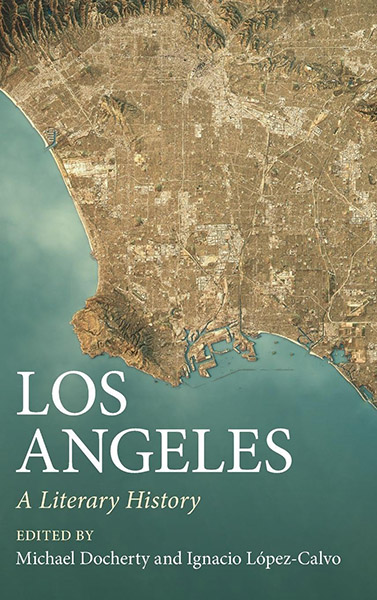
“Los Angeles: A Literary History” devotes 24 chapters and more than 400 pages to exploring the writers who shaped or were shaped by L.A.’s complicated realities and myths. The book’s promotional copy expresses these quixotic forces this way: “No city occupies as many paradoxical positions in the popular imagination. It is the new frontier and the end of the trail; it is American Eden and Babylon by the Pacific.”
“A Literary History” stretches from Los Angeles’s annexation by the United States in 1848 to the present day. Along the way, readers encounter familiar authors such as Raymond Chandler, Joan Didion, Aldous Huxley, Thomas Pynchon, Octavia Butler, and Gore Vidal. But López-Calvo and co-editor Michael Docherty, an English professor at Appalachian State University, have a larger story to tell.
“Through analysis of the city’s literary traditions, it explores contradictory images and stereotypes of L.A. in the American popular imagination, contrasting them with the lived experience of its denizens,” López-Calvo explained.
The book is organized into four sections:
- Tracing the city's literary history through cultural inflection points, from early Southern California stories that romanticized the land as a haven for White settlers while masking the racialized conquest beneath, to counter-narratives challenging Hollywood, the growing metropolis, and its booster myths.
- Examining minoritized voices — Latinx, Asian American, African American, Jewish, queer and women's writing, plus Spanish- and Japanese-language literature.
- Exploring how L.A.'s fragmented, centerless urban landscape shapes writing about freeways, migration, diaspora, and natural disasters.
- Delving into crime fiction, science fiction, life writing, drama, poetry and essayistic criticism.
López-Calvo co-wrote one of the chapters with Southern Methodist University literature Professor Jayson Gonzales Sae-Saue titled “From the Wrong Side of the Tracks: The Spaces of L.A. Latinx Writing.” It draws a throughline from the Spanish-language newspapers of the 1870s to modern and contemporary narratives.


